

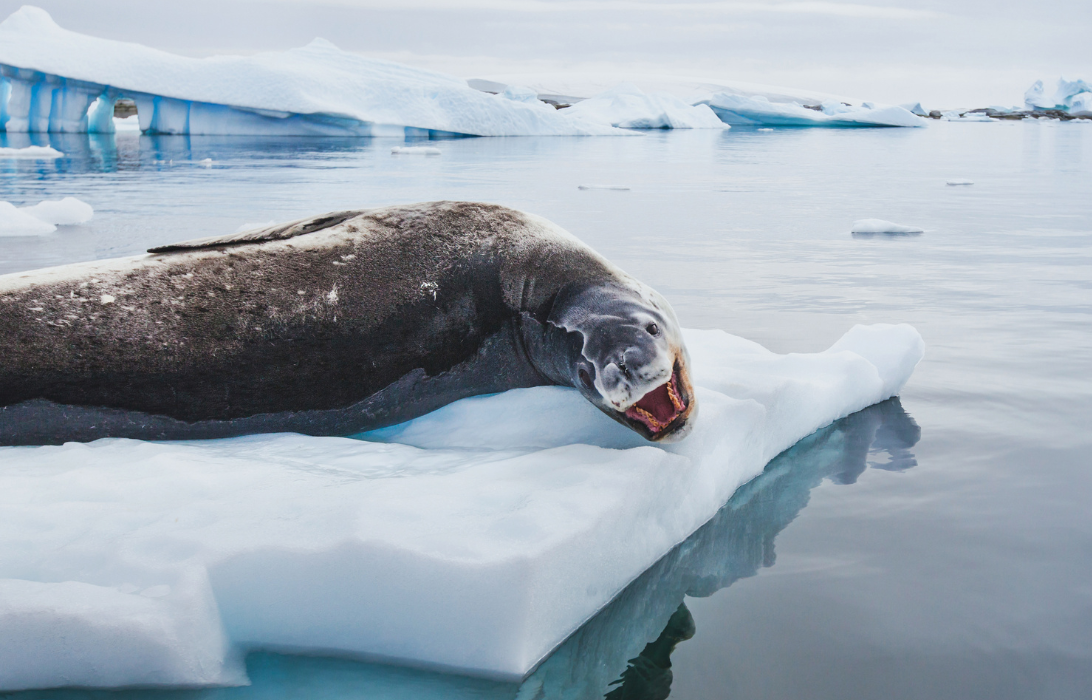
Leopard Seal
Leopard seals are quite the vocalists of the underwater world, especially during the austral summer. The males produce loud calls for many hours each day, alternating underwater calling bouts with silent breathing periods at the surface. Listen for yourself in this audiograph, which shows the recording’s waveform and spectrogram.
Leopard Seal Facts
LATIN NAME Hydrurga leptonyx.
LENGTH Males are generally about 2.8 m (9.2 ft), and females about 3.0 m (9.8 ft). Large females may exceed 3.5 m (11.5 ft).
WEIGHT Males are generally about 320 kg (705 lb), and females about 370 kg (816 lb). Large females may weigh over 500 kg (1,100 lb).
LIFETIME 26 years or more.
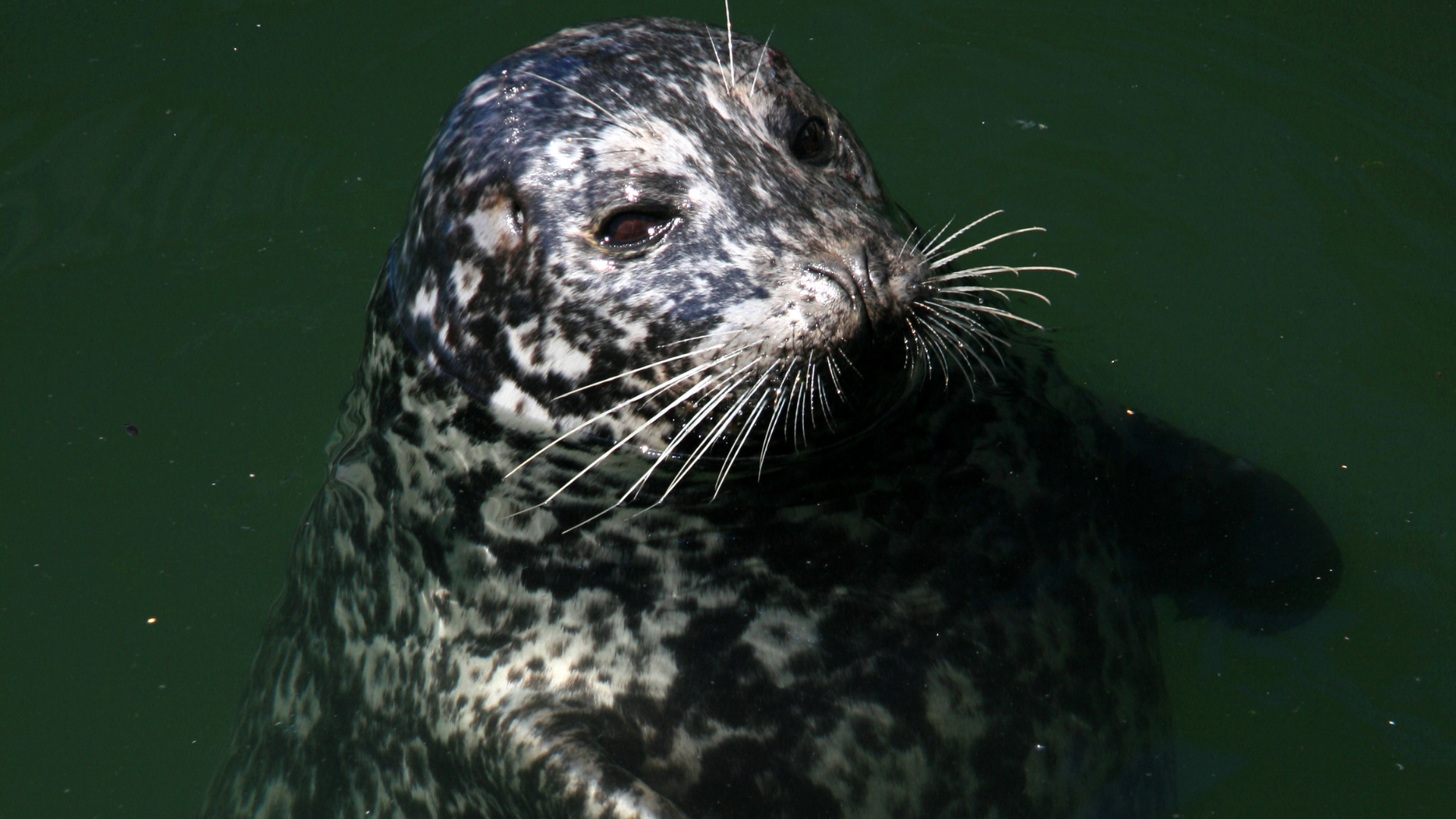
PHYSICAL TRAITS The leopard seal has a distinctively long and muscular body shape when compared to other seals, but it is perhaps best known for its massive jaws, which allow it to be one of the top predators in its environment. The front teeth are sharp like those of other carnivores, but their cheek teeth interlock in a way that allows them to sieve krill from the water in the manner of the crabeater seal. The coat is counter-shaded, with a darker gray back and a paler, spotted underside that gives the seal its “leopard” name. Females are slightly larger than males.
BEHAVIOR Leopard seals are very vocal underwater during the austral summer. The male seals produce loud calls for many hours each day. One study measured calls from a single male at 153–177 dB re 1 μPa at 1 m. Calling bouts alternate with silent periods at the surface to breathe; these are phases of the display rather than two call types. Their repertoire includes bird- or cricket-like trills, low haunting moans, and hoots. A 2024 study in Seaview Bay, Antarctica, identified a triple ascending trill, adding detail to the known repertoire.
HABITAT They are generally solitary, both on the ice and at sea, apart from mothers with pups and occasional temporary gatherings. Their main habitat is the Antarctic pack ice and surrounding waters, with ice floes used for resting and pupping. Females give birth to a single pup on sea ice during the austral spring.
LOCATIONS Leopard seals can be found in the circumpolar area in the Antarctic pack ice. A small number are found year-round on nearby sub-Antarctic islands just beyond the pack ice. Some have also been observed around coasts as far north as South Africa, South America, Australia, and New Zealand. Small numbers occur in New Zealand year-round, and some individuals remain there for a year or more.
FOOD Smaller seals, fish, squid, krill, penguins, and other birds. The balance varies with location and available prey; krill can form an important part of the diet.
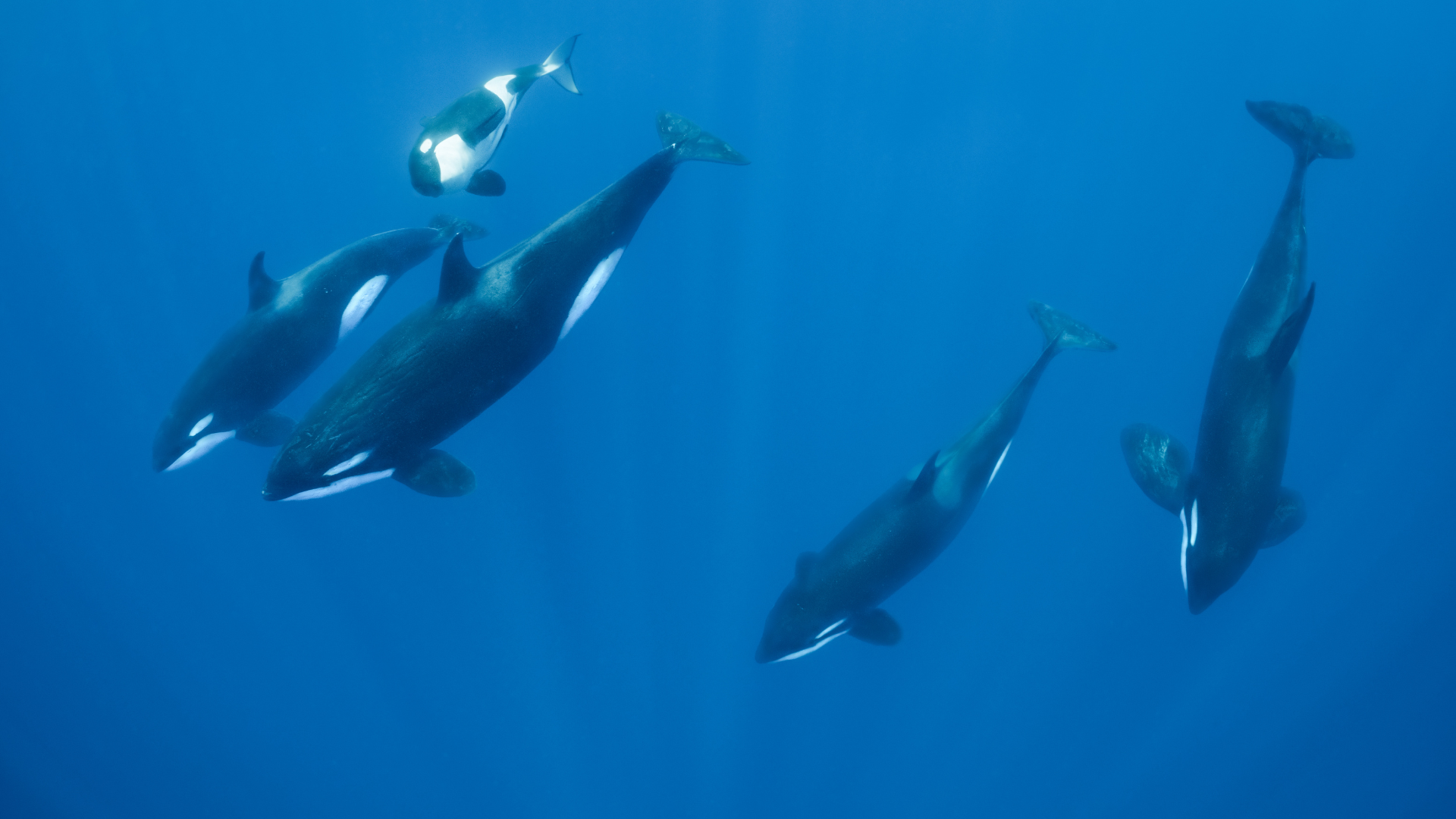
PREDATORS Leopard seals have very few natural predators. Killer whales (orcas) are known to prey on them.